The task of identifying the individual has given rise to a number of technical innovations, including fingerprint analysis and DNA profiling. A range of methods have also been created for storing and classifying people’s identities, such as identity cards and digital records. Identification Practices and Twentieth-Century Fiction tests the hypothesis that these techniques and methods, as practiced in the UK and US in the long 20th century, are inherently related to the literary representation of self-identity from the same period. Until now, the question of ‘who one is’ in the sense of formal identification has remained detached from the question of ‘who one is’ in terms of the representation of unique individuality. Placing these two questions in dialogue allows for a re-evaluation of the various ways in which uniqueness has been constructed during the period, and for a re-assessment of the historical and literary historical context of such construction. In chapters ranging across the development of fingerprinting, the institution of identity cards during the Second World War, DNA profiling and contemporary digital surveillance, and an analysis of writing by authors including Joseph Conrad, Graham Greene, Elizabeth Bowen, J. G. Ballard, Don DeLillo, and Jennifer Egan, Identification Practices and Twentieth-Century Fiction makes an original contribution to the disciplines of English Literature, History, and Cultural Studies.
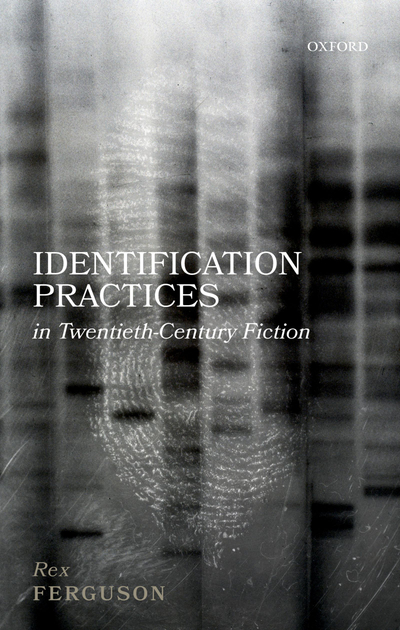
Identification Practices in Twentieth-Century Fiction
R1011,14
| Authors | |
|---|---|
| Language | |
| Publisher | |
| ISBN | 9780192635006 |
| Number Of Pages | |
| File Size | 2.10 mb |
| Format | EPUB |
| Published | 14-07-2021 |


